Business Websites That Convert
A custom-coded business website that loads fast, ranks and turns visitors into enquiries, built on a design-token system. Our build process, not a client story.
5
Build Stages
2 (design sign-off + pre-launch QA)
Human Gates
3-6 weeks
Typical Build Window
Code, content, analytics, and domain
You Own
These figures describe how the work is structured — stages, gates, and timelines — not claimed client outcomes. We publish capabilities and our own internal systems as proof, never invented case studies.
The Challenge
Most business websites are template builds that look fine on launch day and then rot: slow pages, no tracking, an SEO setup nobody understood, and a structure so rigid that adding one landing page means calling the agency back. The owner ends up with a brochure they are afraid to touch. This capability exists to hand you the opposite: a fast site you own, on a system where new pages are cheap.
A business website that converts is a page architecture where every visitor lands on something built for their intent, reads fast enough that they stay, and meets a clear next step — a form, a call, a booking. Underneath it sits a design system that makes the fortieth page as cheap to ship as the fourth.
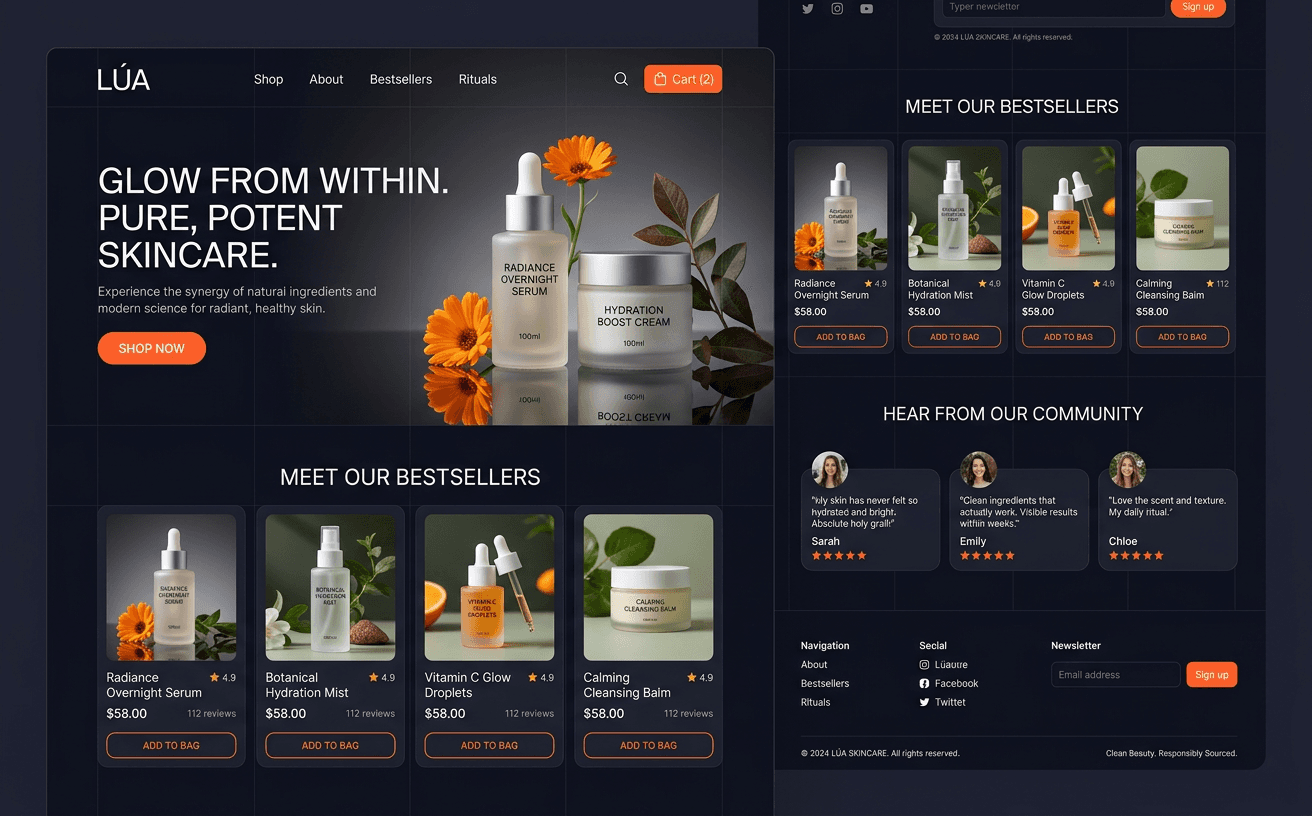
This page is a walkthrough of how we do that work, not a client story. The proof is the site you are reading: 40+ pages running on one design-token system, custom-coded in Next.js, where a new landing page goes from brief to live in an afternoon. Our weekly Search Console report emails itself with zero human involvement, so we watch our own SEO the same way we would watch yours.
When You Need This
- Your site looks acceptable but loads slowly on a phone, and you suspect people leave before it finishes.
- Adding a page means paying an agency and waiting two weeks.
- You get traffic but cannot say which pages produce enquiries, because nothing is tracked.
- Google indexes your homepage and ignores the rest.
- The template you bought fights you every time you want something it did not anticipate.
How the Work Is Done
1. Strategy Before Pixels
We start with who lands on the site and what they should do next. That produces a page architecture: which pages exist, what question each one answers, and where its call to action points. Copy structure gets decided here too, because a beautiful page with the wrong argument converts nobody. This stage is short but it is where most template sites already lost.
2. The Design System
Before any page is built, we define the tokens: colours, type scale, spacing, and the component set. Buttons, cards, section layouts, and forms are written once and reused everywhere. The payoff is compounding — every future page inherits the system, which is why our own site can add a landing page in an afternoon instead of a sprint. The first human gate sits here: you sign off the system and a sample page before we build the rest.
3. The Build
Custom Next.js and TypeScript, mobile-first, no page builders. Server components render the content; client components carry only the interactivity that earns its weight. We keep JavaScript light on purpose, because speed is a revenue feature: a visitor on a mid-range phone with patchy 4G is your median visitor, not your edge case.
4. SEO and Tracking Hardening
Every page gets its own metadata, structured data where it applies, and a place in an auto-generated sitemap. Analytics and form tracking are wired in before launch, not bolted on after, and leads land in a database you own rather than an inbox. If you cannot see which page produced an enquiry, the site is decorating, not working.
5. QA and Launch
The second human gate: a pre-launch pass across devices and connection speeds, checking Core Web Vitals, broken links, form submissions end to end, and that every redirect from the old site resolves. Then we launch, watch the first days of real traffic, and hand over the repository with a runbook.
Where This Goes Wrong
- Design first, argument never. Sites built as visual projects convert poorly because nobody decided what each page must persuade a visitor to do.
- Template debt. The theme that saved three weeks at launch costs a week every time you fight it afterwards. Custom code is cheaper over any horizon past six months.
- Launch-day SEO. Metadata, structured data, and sitemaps retrofitted after launch means months of indexing you did not need to lose.
- The untouchable site. If the owner is afraid to add a page, the site stops growing. A design system exists precisely so that it never becomes precious.
What You Get
You get the full codebase in your own repository, the design-token system documented so any developer can extend it, your analytics account, your lead database, and your domain. Nothing lives in our accounts. We hand over an asset you control, plus a runbook for the routine jobs — new pages, content edits, reading the reports.
If your current site is a brochure you are scared to touch, this is the rebuild that makes it a working asset. See how we build websites →
Project Details
Client
Capability showcase — how we do this work
Industry
Web Development
Services
Timeline
3-6 weeks depending on page count and integrations
Team
Designed and built by Naavim Labs
Scope
Strategy, design system, custom Next.js build, SEO and performance hardening, analytics, launch and handover
Delivery Snapshot
Stack
Deliverables
- Conversion-led page architecture and copy structure
- Design-token system (colours, type, spacing, components)
- Custom Next.js build, mobile-first and responsive
- Per-page SEO metadata, structured data, sitemap
- Analytics and form/lead tracking wired to your database
- Launch QA checklist and performance report
- Full code handover in your repository
More Case Studies
What Made It Work
Services Behind This Result
Still Scrolling?
Every Extra Scroll Is Time Your Competitors Are Using Better.
Strategic builds, AI systems, and growth engines for ambitious teams. If your project is a fit, we move fast and build deep.
Book
Pick a 30-min slot that works
Review
We assess fit before the call
Call
Strategy session with next steps
Best for teams with a real growth constraint, a decision-maker in the room, and urgency to ship.
We take a limited number of active builds to keep execution sharp.
Or email manav@naavimlabs.com if you already know what you want built. Not ready yet? Browse the case studies and come back when the timing is right.