FreightFlow Logistics: SaaS Dashboard Redesign
We redesigned a 47-screen enterprise logistics dashboard users actively avoided into one they wanted to use. Task time dropped 40%. Platform adoption tripled.
40% faster
Task Completion
3x
User Adoption
-67%
Support Tickets
28 → 72
NPS Score
All metrics measured over 90 days post-launch across 2,400 active platform users on the FreightFlow production environment.
The Challenge
FreightFlow's operations dashboard had grown into a 47-screen labyrinth of nested menus, redundant data tables, and inconsistent UI patterns. Users were routing around the platform: pasting shipment IDs into spreadsheets, calling dispatchers, and filing tickets for tasks the software was supposed to automate.
Proof
What We Actually Built
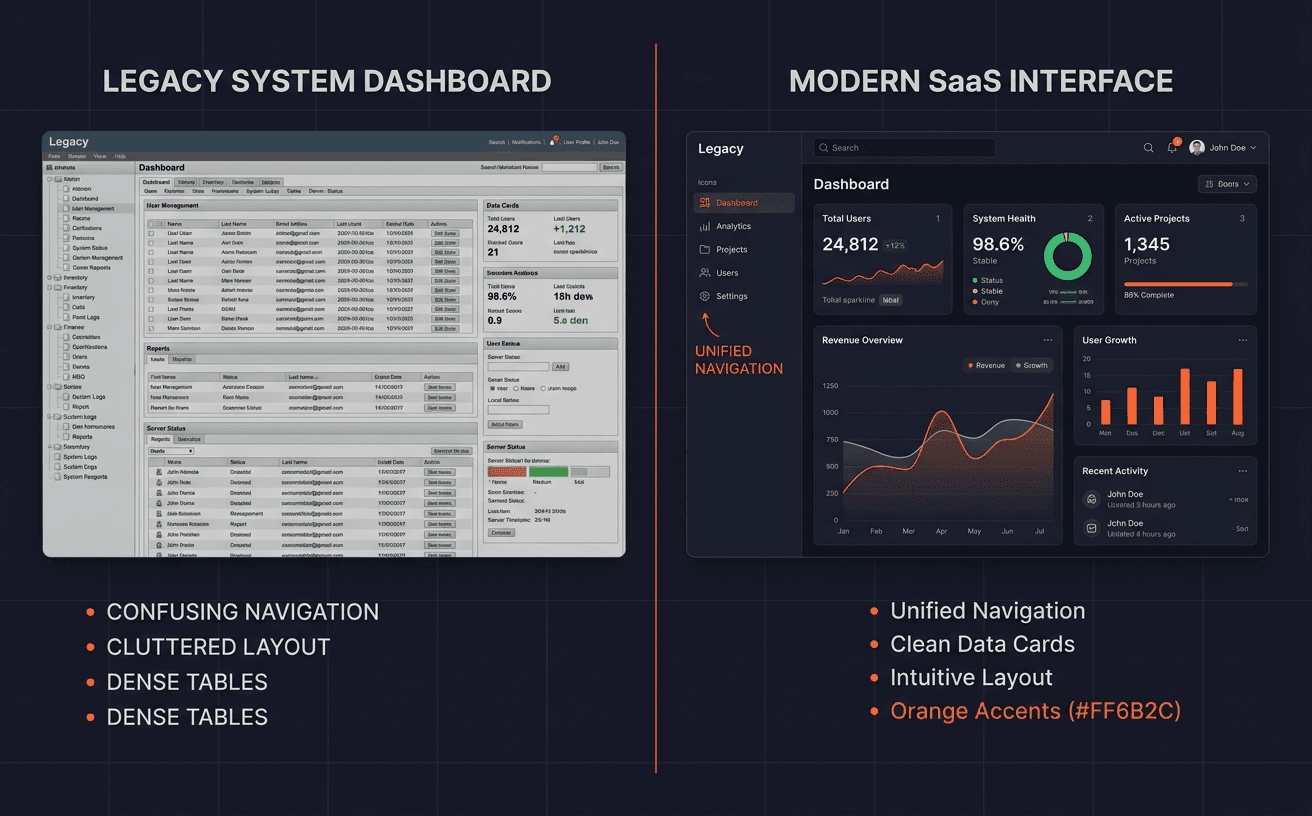
Dashboard Before and After
Side-by-side view of the cluttered legacy dashboard next to the new interface with unified navigation.
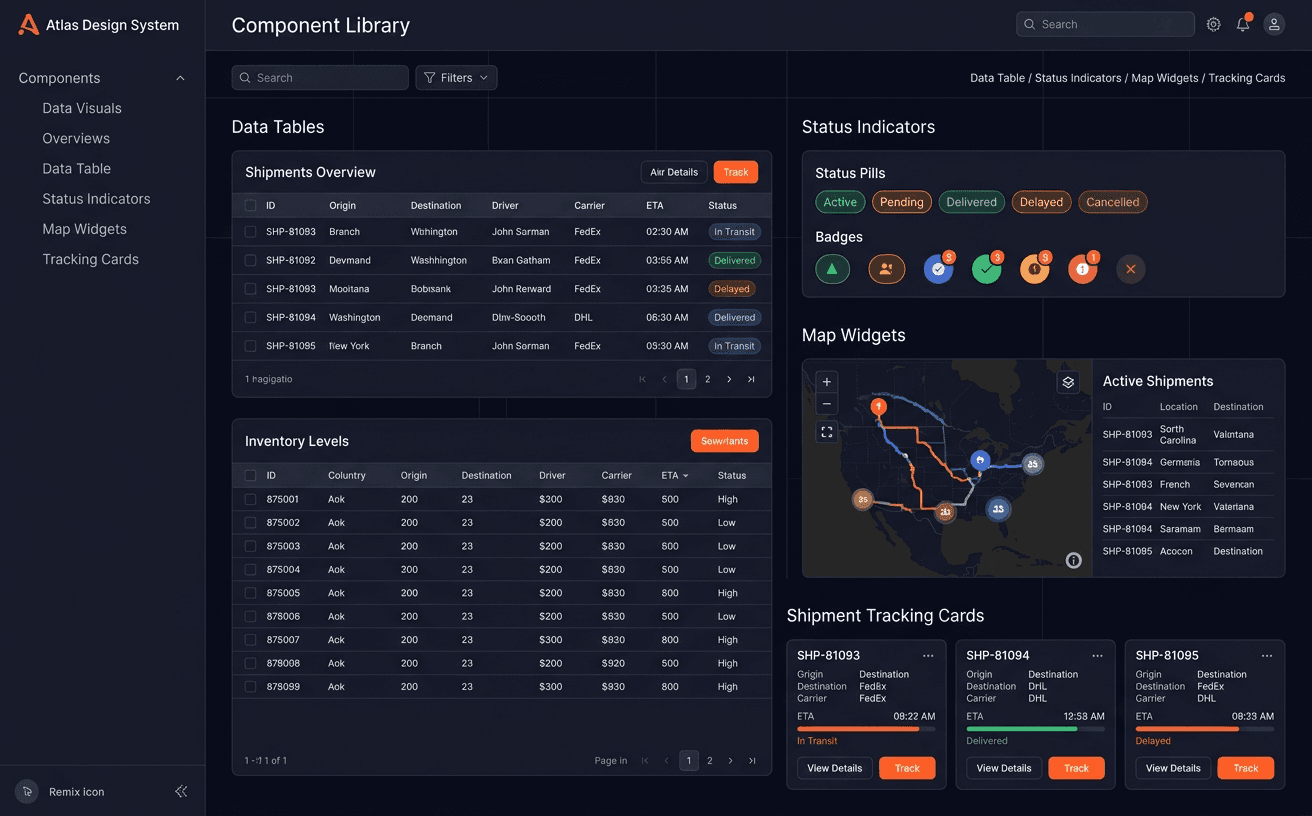
Component Design System
Modular component library with data tables, status indicators, map widgets, and shipment tracking cards.
The Challenge
FreightFlow Logistics manages shipments for mid-market and enterprise clients across India. Their operations platform had been stitched together over five years. New screens were bolted onto old ones. Navigation contradicted itself. Data visualizations required a tutorial to decipher.
The result was brutal:
- 47 screens with no consistent navigation model. Users had to memorize where everything lived.
- Average task completion time of 8+ minutes for workflows that should take under 2.
- Support ticket volume dominated by UI confusion, not actual system errors.
- NPS of 28. Users were actively warning peers away from the platform.
Adoption had flatlined. Power users built Excel workarounds. New hires took weeks to get productive. The product team knew the platform was losing them deals.
Our Approach
We treated this as a product problem, not a visual refresh. Research came before a single pixel.
1. Deep UX Audit and User Research
We spent 6 weeks inside the existing platform. Shadow sessions with 18 operations managers. Heatmap analysis. Session recordings. A full 47-screen UX audit. We documented every dead end, every redundant action, every moment a user switched to a spreadsheet. The audit report gave the FreightFlow product team a shared vocabulary for what was broken and why.
2. Information Architecture Overhaul
The core problem was structural. We collapsed 47 screens into a coherent hierarchy: 5 primary navigation zones, role-based dashboard views, and a universal search layer that surfaces any shipment, route, or document in under 2 keystrokes. Workflows that used to need 6 screens now resolve in 2.
3. Design System Built for Scale
Rather than designing 47 screens from scratch, we built a modular component library first: data tables with inline actions, shipment status indicators, D3.js route maps, timeline widgets, and notification patterns. Every screen in the redesign was assembled from this system. That kept consistency tight and gave FreightFlow's internal team a foundation to build on without breaking anything.
4. Frontend Rebuild
We rebuilt the dashboard frontend in React and TypeScript, wired to FreightFlow's existing REST APIs. No backend changes required. Storybook documented every component. Every interaction was tested against real user workflows we identified in research, not hypothetical use cases.
The Results
Measured over 90 days post-launch across 2,400 active platform users:
- Task completion time dropped 40%. Workflows that averaged 8+ minutes now complete in under 5.
- User adoption tripled. Daily active users went from 31% to 94% of licensed seats.
- Support tickets fell 67%. Confusion-driven tickets were effectively eliminated.
- NPS jumped from 28 to 72. Users who used to warn peers away are now recommending the platform.
- New hire ramp time cut in half. The system is learnable without a manual.
FreightFlow's product team shipped the redesign on schedule and within budget. The design system they now own means every future feature starts from a consistent, tested foundation. Not a blank canvas.
Project Details
Client
FreightFlow Logistics
Industry
Logistics / Enterprise SaaS
Services
Timeline
6 weeks research + 10 weeks build
Team
UX researcher, product designer, 2 frontend engineers, design systems lead
Scope
UX research, information architecture, design system, dashboard redesign, frontend development
Delivery Snapshot
Stack
Deliverables
- UX audit report
- User research synthesis
- Design system
- 47-screen redesign
- Frontend rebuild
CLIENT SAYS:
“Our ops team dreaded opening the old dashboard. Now they're actually using it, and asking for more features. Naavim Labs didn't just redesign screens, they fixed how our entire product feels to work in.”
Rohan Mehta
Head of Product, FreightFlow Logistics
What Made It Work
Services Behind This Result
Still Scrolling?
Every Extra Scroll Is Time Your Competitors Are Using Better.
Strategic builds, AI systems, and growth engines for ambitious teams. If your project is a fit, we move fast and build deep.
Book
Pick a 30-min slot that works
Review
We assess fit before the call
Call
Strategy session with next steps
Best for teams with a real growth constraint, a decision-maker in the room, and urgency to ship.
We take a limited number of active builds to keep execution sharp.
Or email contact@naavimlabs.com if you already know what you want built. Not ready yet? Browse the case studies and come back when the timing is right.