Free calculator for Indian SMBs
How much money are you losing to slow lead follow-up?
78% of leads close with whoever replies first. Plug in your numbers, and we'll show you the leak in INR, then the fix.
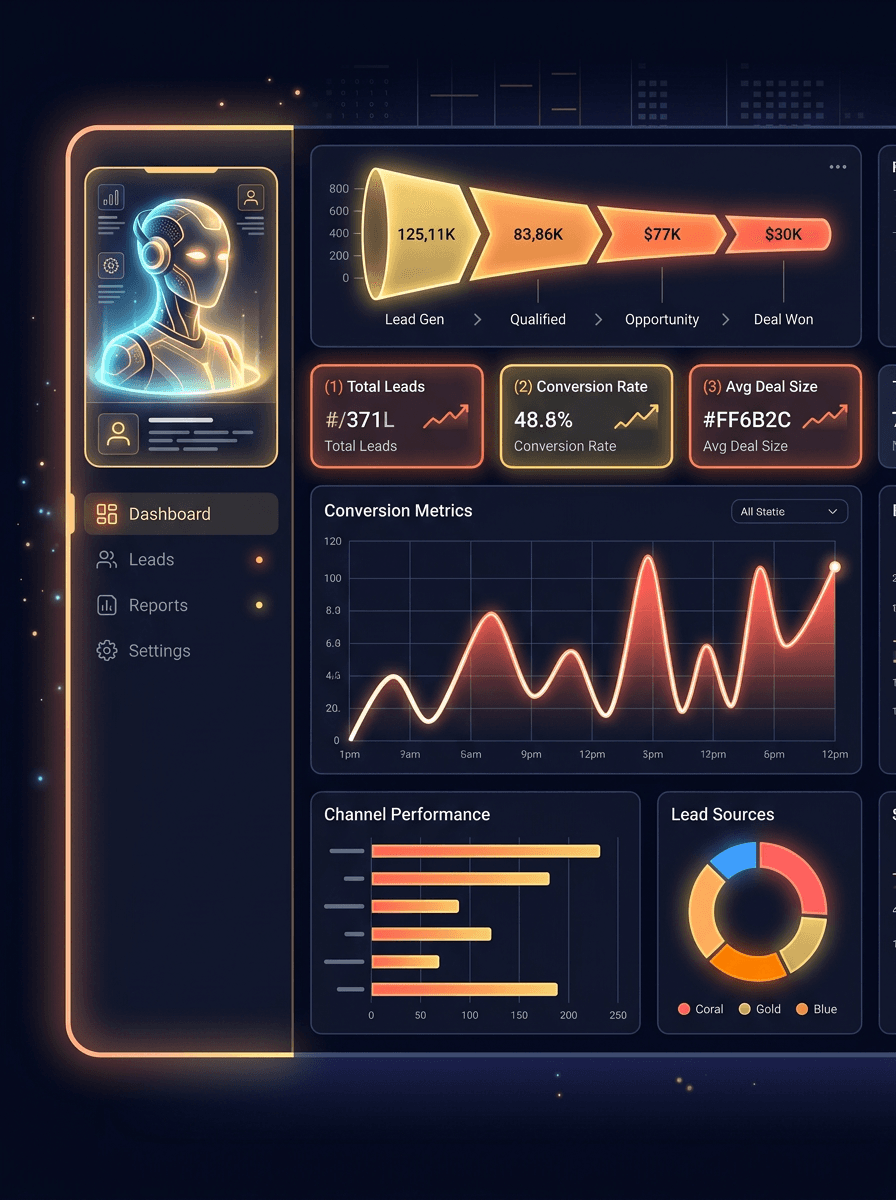
Systems we build and run in production
- Outbound Engine
- Content Engine
- AI Scoring
- Sending Infra
- Design System
- SEO Reports
The numbers behind the calculator
- 78%of B2B leads close with the vendor who replies first, irrespective of price or pitch
- 100xmore likely to convert if first contact is under 5 minutes vs over 5 hours
- 4,300+leads acquired by our own outbound engine across 8 live sources, every one scored 0-100 by AI before a human approves any campaign, the same speed-to-lead discipline the calculator modelsNaavim Labs internal systems, 2026
- 15,000+emails sent through our own sending infrastructure, so the follow-up math on this page comes from systems we run in production, not a slide deckNaavim Labs internal systems, 2026
How the missed-lead calculator works
- 01
Punch in four numbers from your last quarter
Monthly lead volume across all channels (ads, portals, inbound forms), average deal value or first-order value, current median first-reply time, and current close rate from lead to closed-won. That's the whole input set. We don't need access to your CRM, and nothing is saved to a database without your email opt-in.
- 02
We model two scenarios side-by-side
Scenario A is your current setup with the first-reply latency you reported. Scenario B is a Growth Engine deployment with sub-5-minute first-reply, a close-rate lift modelled on the published speed-to-lead research linked above, and channel-specific adjustments for WhatsApp-first vs email-first stacks. The delta between the two is your monthly leak, expressed in INR, not percentage points, so it's board-pack ready.
- 03
You get the gap in INR and the fix path
The calculator outputs monthly leakage, 12-month projection, and a per-channel breakdown, then routes you to the right next step: book the 20-minute audit for a customised model with your CRM data, read the relevant vertical playbook, or run the conversion autopsy tool on a specific landing page that's leaking the hardest.
Where the missed-lead leak actually shows up by industry
The leak is universal but the magnitude varies. Five Indian SMB segments where we've quantified the gap.
Real estate developers: 99acres + MagicBricks
Portal leads are expensive and perishable; a first reply measured in hours means most are dead on arrival. Largest absolute INR gap of any vertical because deal values are high.
Read the real estate follow-up system playbookD2C Shopify brands: abandoned-cart recovery
Email-only cart recovery sits at 5% in India; WhatsApp-led recovery clears 15-18%. The leak is 3x your current monthly recovery revenue.
Read the D2C WhatsApp automation playbookCA + tax practices: tax-season triage
March enquiry volume spikes 5x but the inbox doesn't. Median 8-hour first-reply during ITR season; the leak is 16-20% of annual engagement revenue.
Read the AI workflow automation playbookB2B services + agencies: proposal-stage drop
MQL-to-SQL drops 30-40% when reps don't reply same-day. The leak is concentrated in week 1. Most leads are saved or lost inside the first three working days.
Read the AI lead qualification agent playbookClinics + doctor practices: appointment booking
JustDial + Practo enquiries die in voicemail because reception is on a call. WhatsApp first-touch lifts booking rate 2.5x. Patient retention is the second-order win.
See the B2B services vertical hub
Plug in your numbers and see the leak in INR
Coming soon as a live tool in Q3 2026. Right now this section renders as a card linking you to the static estimator scenarios below and the audit booking. Same math, just without the interactive sliders.
The interactive calculator ships in our next product drop. Until then, book a 20-min call — we'll plug your numbers in live and email you the breakdown.
Calculate it with usStatic estimator: five Indian SMB scenarios (until the live interactive tool ships in Q3 2026)
| Scenario inputs and outputs (per month) | Scenario A: slow follow-up (current state) | Scenario B: Growth Engine deployed (post-state) | Monthly INR revenue gap |
|---|---|---|---|
| Small SMB: 100 leads/mo, ₹25,000 avg deal | First reply: 6 hrs. Close rate: 8%. Monthly revenue: ₹2,00,000. | First reply: <5 min. Close rate: 18%. Monthly revenue: ₹4,50,000. | +₹2,50,000/mo |
| Mid SMB: 400 leads/mo, ₹40,000 avg deal | First reply: 4 hrs. Close rate: 10%. Monthly revenue: ₹16,00,000. | First reply: <5 min. Close rate: 22%. Monthly revenue: ₹35,20,000. | +₹19,20,000/mo |
| Real-estate developer: 800 portal leads/mo, ₹2,00,000 booking-amount value | First reply: 9 hrs. Booking rate: 2%. Monthly revenue: ₹32,00,000. | First reply: <5 min. Booking rate: 4.5%. Monthly revenue: ₹72,00,000. | +₹40,00,000/mo |
| D2C Shopify brand: 1,200 cart-abandonment leads/mo, ₹1,800 AOV | No WhatsApp recovery. 5% recovery via email. Monthly revenue: ₹1,08,000. | WhatsApp + AI recovery. 17% recovery rate. Monthly revenue: ₹3,67,200. | +₹2,59,200/mo |
| CA firm: 60 inbound enquiries/mo (tax season 5x), ₹35,000 avg engagement | First reply: 8 hrs. Engagement rate: 12%. Monthly revenue: ₹2,52,000. | First reply: <5 min. Engagement rate: 28%. Monthly revenue: ₹5,88,000. | +₹3,36,000/mo |
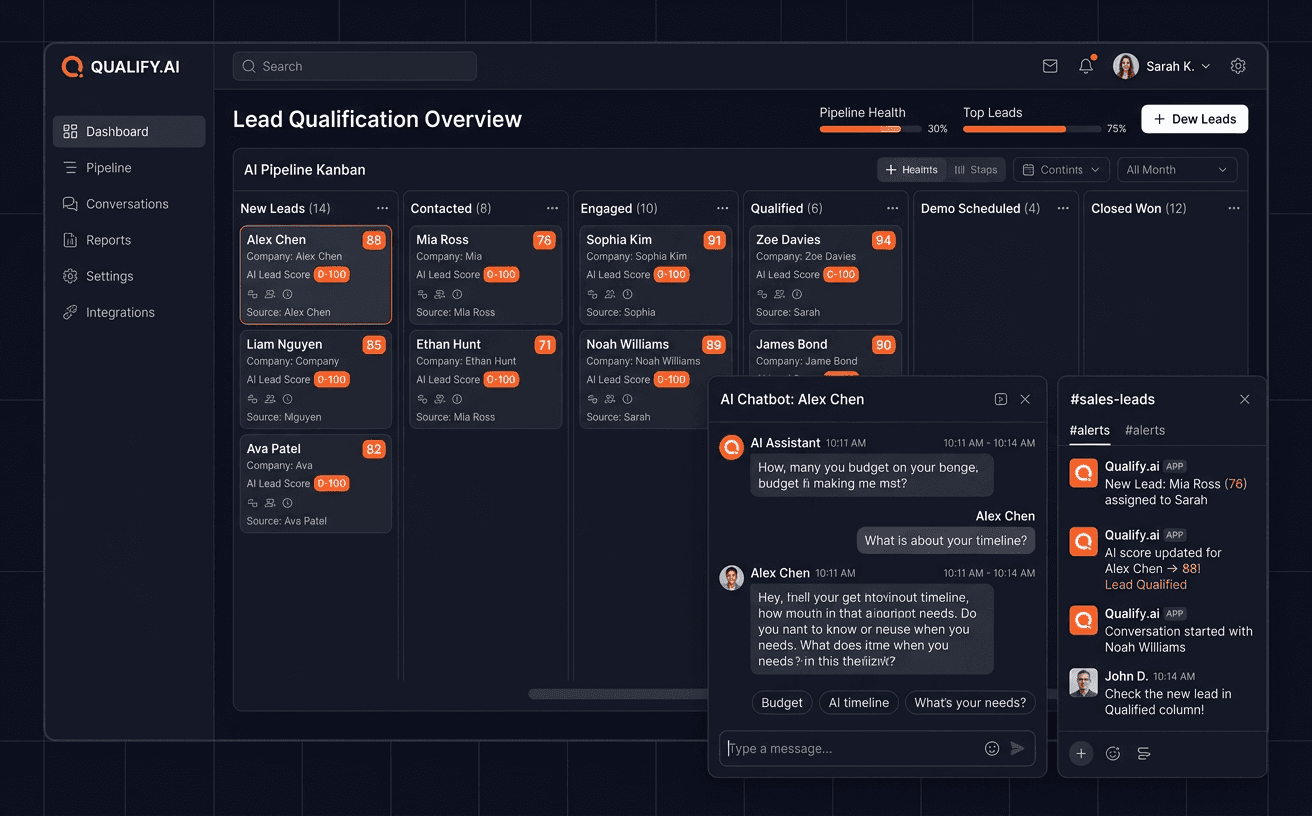
Capability showcase — how we do this work · B2B Lead Generation
AI Sales Pipelines: How We Build Them
“We do not just model the follow-up math, we live it. Our own outbound engine acquires the leads, an AI scores every one 0-100, and a human approves every campaign before a single email leaves our sending infrastructure.”Read the full case study
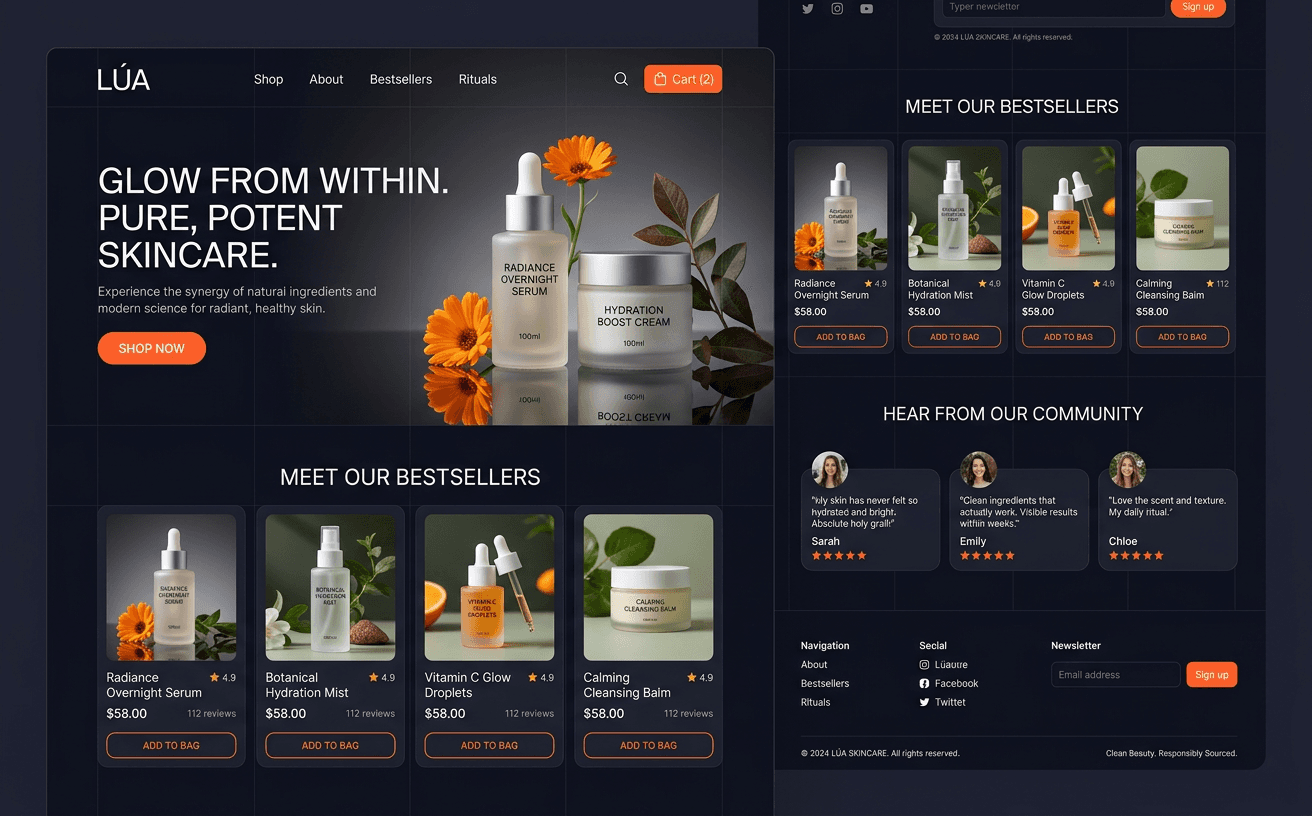
Capability showcase — how we do this work · Growth & Digital Marketing
Acquisition Engines: Marketing You Can Actually Measure
“An acquisition engine is only as good as the follow-up wired behind it. Ours runs end to end, acquire, enrich, score, send, track, with a human gate before anything customer-facing goes out. That is the same architecture we deploy for clients.”Read the full case study
Already lost the lead? Find out why with the conversion autopsy
If the calculator showed you a six-figure monthly leak, the next question is which step is bleeding hardest: the landing page, the form, the follow-up cadence, or the channel orchestration. The conversion autopsy tears down a specific landing page or funnel URL you supply and surfaces the top three fixes in under 5 minutes, scored by likely conversion uplift. It runs Gemini via Vertex AI under the hood, the same model that powers our paid audit deliverables.
What the audit deliverable actually contains
- 20minlive audit call where we walk through your last-quarter lead data and quantify the leak per segmentNaavim Growth Engine standard scope
- 1pgleakage memo you keep regardless of whether you hire us: your numbers, our benchmarks, fix-priority listNaavim audit deliverable spec
- 14dfrom kickoff to a deployed Growth Engine that closes the largest leakage gap surfaced in the auditNaavim Growth Engine standard scope
Missed-lead cost calculator: your questions answered
Where does the 78% statistic come from?
The Lead Connect 2024 Indian B2B response survey of roughly 1,800 Indian buyers found that 78% of closed deals went to the vendor who replied first, independent of price, brand, or pitch quality. This mirrors the older InsideSales / Lead Response Management Study (2007), which is where the original 5-minute rule originated. Both sources are linked in the stat-block above so you can verify the methodology before bringing the number into your board pack.What formula does the calculator use?
Monthly leakage equals monthly leads multiplied by deal value multiplied by the gap between Scenario B and Scenario A close rates. Scenario B models the close-rate lift implied by the published speed-to-lead research linked in the stat block above (HBR and Lead Connect), with channel-specific adjustments for WhatsApp-native versus email-first stacks. It is deliberately conservative: the model assumes you capture only part of the lift the research documents, so the calculator under-promises rather than over-sells.My deal value varies wildly. Does the calculator handle that?
Use the weighted-average deal value across your last 12 months. If you have a bimodal mix (e.g. ₹20K starter plans and ₹2L enterprise plans), run the calculator twice, once per segment, and add the gaps. Real estate developers should run it per project-tier (premium versus mid-segment). The audit produces a full per-segment leakage model with your actual closed-won and closed-lost data; the calculator is the first-pass estimate that proves the math is worth the audit.How accurate is the static estimator table below?
It uses the same formula as the live tool will use. The five scenarios are illustrative worked examples built from typical Indian SMB lead volumes and deal values, they are not client results. Treat them as a starting frame: if your inputs are close to one of the rows, the formula shows what the gap could look like, and the 20-minute audit replaces the assumptions with your actual CRM numbers. The biggest swing factor is your industry. Real estate sees the largest absolute INR gaps because deal values are high; D2C sees the highest percentage uplifts because cart-recovery is currently almost zero.Can I get a customised analysis for my business?
Yes, that's the 20-minute audit. You bring last quarter's lead-volume, ad-spend, and CRM close-rate report; we walk you through a per-segment leakage model and the specific Growth Engine fixes that would close each gap. Output is a one-page memo you keep regardless of whether you hire us, plus a recommended deployment sequence with the fix path per phase.What does it actually take to close the leak? Is it just a faster reply time?
Faster first-reply is necessary but not sufficient. The full close requires four things working together: WhatsApp-first capture (so the lead lands somewhere AI can instantly reply), AI qualification (so reps only see warm leads and don't burn out on cold ones), CRM source-of-truth (so nothing falls between channels), and a multi-touch nurture cadence for leads that don't close on the first conversation. The Growth Engine ships all four in 14 days.When does the live interactive calculator ship?
Q3 2026 (Phase 3 Session 3.D in our internal roadmap). It will accept your four inputs and return a 12-month leakage projection plus a fix-path PDF in under 90 seconds, the same auth flow as the existing automation advisor and conversion autopsy tools, so your inputs are saved against your email for follow-up. Until then, the static estimator table above + the 20-minute audit cover the same ground.
Keep reading
Every hour a lead waits, it gets twice as cold. Fix the follow-up gap in 14 days.
Free audit produces a per-segment leakage model with your actual numbers. You keep the memo either way.